Dogs don't sweat the way we do, they shed heat mainly by panting, which becomes far less effective in high heat and humidity. In a climate like Dubai's, that makes a handful of simple routines genuinely life-saving.
Heatstroke is an emergency. If you suspect it, start cooling your dog immediately and contact a vet on the way. It can become fatal within minutes.
1. Walk in the safe windows, early morning and late night
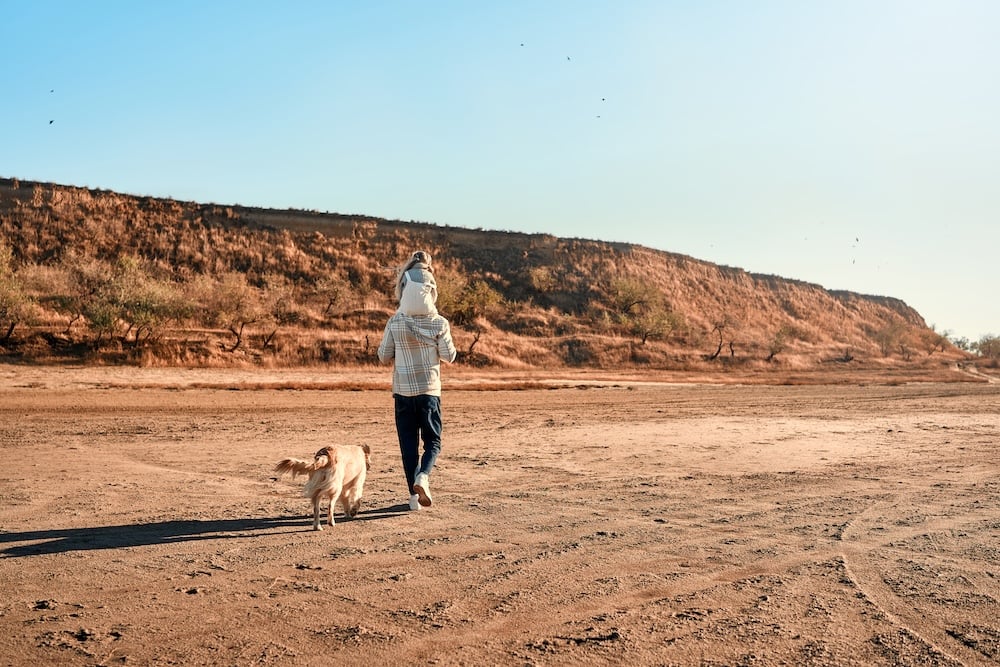
The single biggest change you can make is when you walk. Through the peak of summer, aim for the coolest parts of the day, typically just after sunrise and late in the evening once surfaces have had time to cool. Midday and afternoon walks should be avoided entirely. Keep them short, stay on shaded routes where you can, and turn back early if your dog is lagging or seeking shade.
2. Do the seven-second pavement test
Asphalt, paving and sand absorb and hold heat long after the air starts to feel bearable. Before any walk, press the back of your hand flat against the ground for seven seconds. If you can't hold it there comfortably, it's too hot for your dog's paws, wait, change route, or carry them across hot stretches.
Burnt paw pads are common and painful. Watch for limping, licking at the paws, or refusing to walk, and consider dog boots for unavoidable hot surfaces.
3. Bring water everywhere
Carry water and a collapsible bowl on every outing, not just long ones. Offer small drinks often rather than one big drink at the end. At home, keep multiple full bowls available, refresh them through the day, and add a few ice cubes to encourage drinking when it's hot.
4. Never leave your dog in a parked car
A parked car becomes dangerously hot in minutes, even in shade and even with the windows cracked. There is no safe version of this in a Gulf summer, if your dog can't come inside with you, leave them at home.
5. Build cool zones at home
Keep your dog indoors in air conditioning during the hottest hours. A cooling mat, a tiled floor to stretch out on, a fan, and access to shade make a real difference. Frozen treats, such as a stuffed toy filled and frozen, or ice cubes in the water bowl, give both cooling and enrichment.
6. Learn the signs of heatstroke, and act fast
Early recognition saves lives. Warning signs include:
- Heavy, frantic panting that doesn't settle
- Excessive drooling, or thick, sticky saliva
- Bright red or pale gums
- Wobbliness, weakness or collapse
- Vomiting or diarrhoea
- Glazed eyes or unresponsiveness
If you see these, move your dog to shade or AC, offer small sips of cool (not ice-cold) water, wet their body with cool water, especially the belly, armpits and paws, and get to a vet immediately. Brachycephalic (flat-faced) breeds, puppies, seniors, overweight dogs and those with thick coats are at higher risk.
7. Adjust exercise and grooming for the season
Swap strenuous outdoor exercise for indoor enrichment, scent games, training, and food puzzles tire a dog out without the heat risk. On grooming, keep the coat clean and well-maintained, but don't shave double-coated breeds down to the skin: that coat insulates against heat and protects from sunburn. When in doubt, ask your groomer or vet what's right for your dog's coat type.
Key takeaways
- Walk only in the coolest parts of the day, and keep walks short.
- If the pavement is too hot for your hand, it's too hot for paws.
- Water everywhere; AC and cool zones at home; never a parked car.
- Know the heatstroke signs and treat them as an emergency.
Local note: Specific safe-walk times and seasonal high-heat dates change from year to year. Check current Dubai Municipality advisories before relying on them, and see our hot-weather guide for how to judge conditions on the day rather than by the calendar.
This guide is for general information only and is not a substitute for veterinary advice. Always consult your local veterinarian about your dog's specific health and safety needs, especially in extreme heat.